Let us be honest about the first week
Your first chain will probably look uneven. One loop tight, the next one loose, and your hands will feel clumsy holding the yarn. That is completely normal. We have all sat there untangling a skein that somehow knotted itself while we were just looking at it, wondering if our hands will ever cooperate. They will. Crochet is muscle memory more than talent, and muscle memory only needs a little patient practice. Give yourself short sessions, ten or fifteen minutes at a time, and stop while it still feels fun. Frustration makes tight stitches. A relaxed hand makes even ones.
The chain stitch, where everything begins
The chain is the foundation for most flat work, and it is also how you turn at the end of a row. You make a slip knot, put it on your hook, wrap the yarn over and pull it through the loop. That is it. One chain done. Try to keep each loop the same size, not pulled tight and not floppy. If your starting chain feels too tight, use a hook one size bigger just for the chain, then switch back. It is a small trick that saves a lot of unpicking, and nobody will ever know you did it.
Single crochet, the stitch you will use most
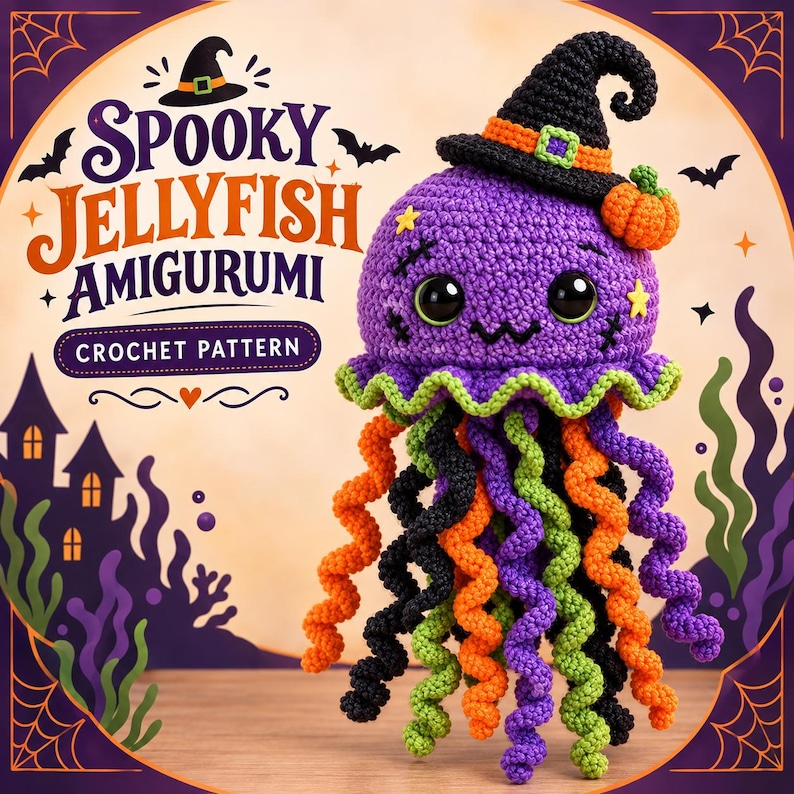
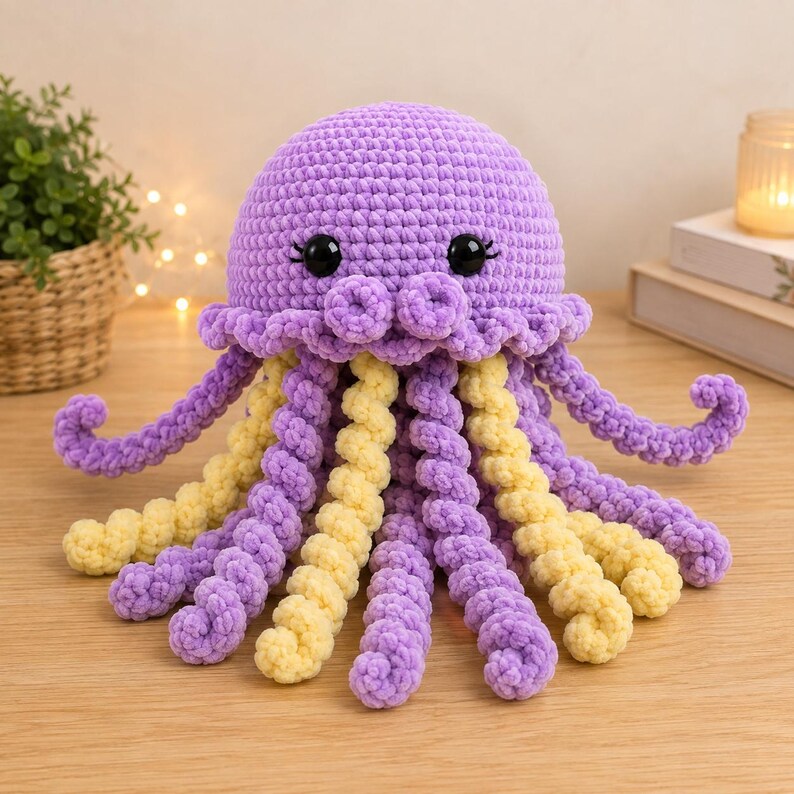
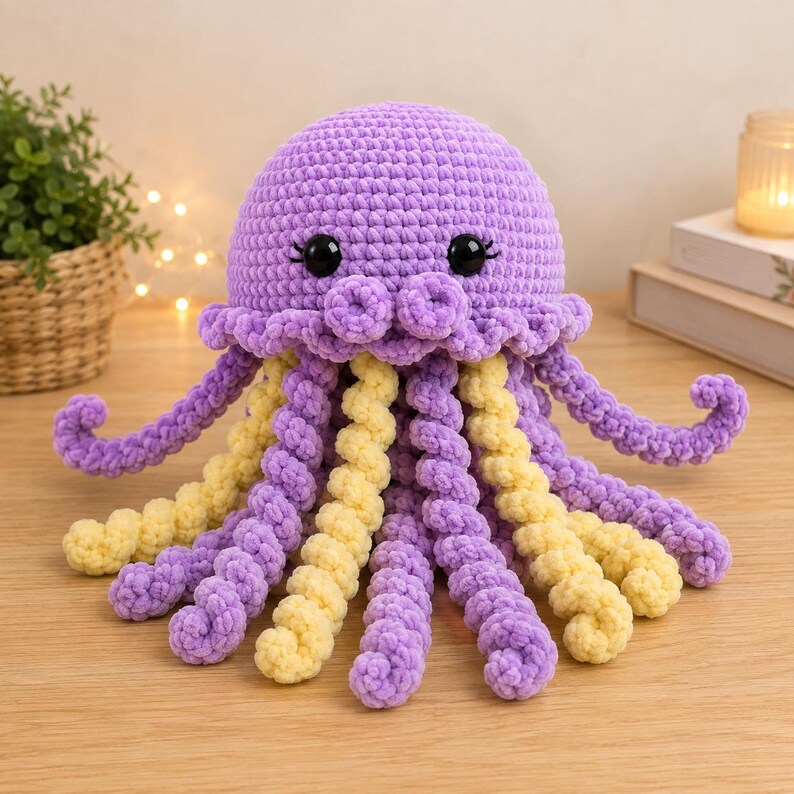
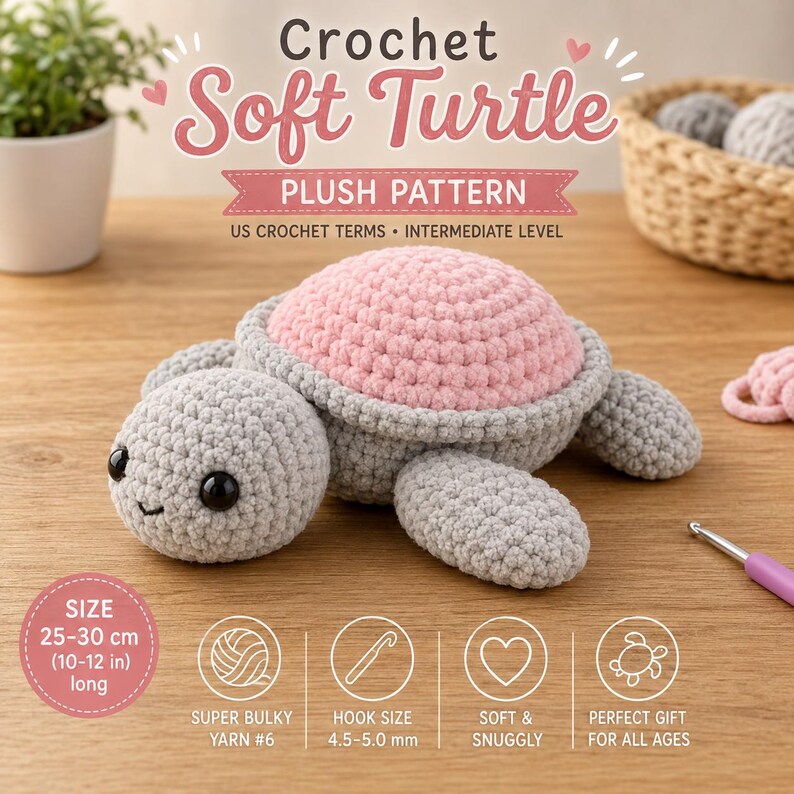
If you learn only one stitch well, make it single crochet. In UK terms it is called double crochet, so check which terms your pattern uses before you start. You insert your hook, pull up a loop, wrap the yarn and pull through both loops. It makes a tight, sturdy fabric with no big gaps, which is exactly why almost all amigurumi is worked in single crochet. Stuffing stays hidden, shapes hold nicely, and the surface looks neat. The little jellyfish in the photo above is mostly single crochet worked in rounds. Simple stitch, sweet result.
Slip stitch, the quiet helper
The slip stitch does not get much glory, but you will use it constantly. It joins rounds, moves your yarn across work without adding height, and gives a clean finish to edges. Insert your hook, pull up a loop and pull that loop straight through the one already on your hook. Done. Because it adds almost no height, it is perfect for closing a round on a hat or tidying the top of a toy. Just keep it loose. A tight slip stitch row is the one stitch that can make you want to throw your work across the room, so ease off your tension here.
Half double and double crochet for softer fabric
When you move from toys to blankets, scarves and wearables, you will meet half double crochet and double crochet. Half double sits in the middle, a bit taller and softer than single crochet. Double crochet grows fast and drapes beautifully, which is why blanket patterns love it. Both start with a yarn over before you insert your hook, so they feel like a small step up in coordination. Practice them on a plain square first. Watch how much faster the fabric grows compared with single crochet. That quick progress feels wonderful after slow, tight amigurumi rounds.
Increase and decrease, how shapes happen
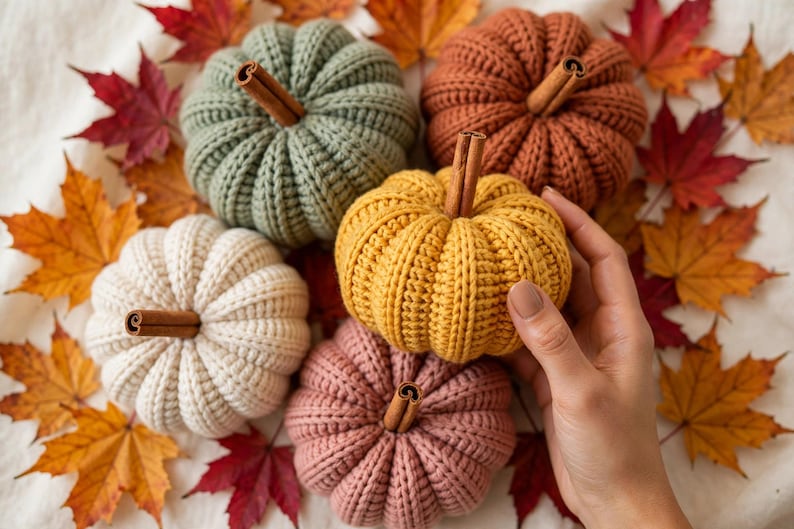
These two are not really new stitches, they are just ways of using single crochet. An increase means you work two stitches into the same place, so your work grows. A decrease means you work two stitches together as one, so your work shrinks. That is the whole secret behind a round ball, a pumpkin, a cat head, almost every plushie shape you have ever admired. When a pattern says inc or dec, it is asking for this. Count at the end of each round, because one missed increase early on will quietly throw every round after it out of shape.
The magic ring, a neat start for toys
Most toys start with a magic ring, a loop you can pull closed so there is no hole in the middle of your work. It feels fiddly the first two or three times. Your fingers will fight you a bit. Then one day it just clicks, and you will wonder why it ever felt hard. If the magic ring really will not behave for you yet, you can chain two and work your first round into the second chain from the hook. It leaves a tiny hole, but for a first project that is fine. Finishing something matters more than a perfect start.
A simple way to practice without pressure
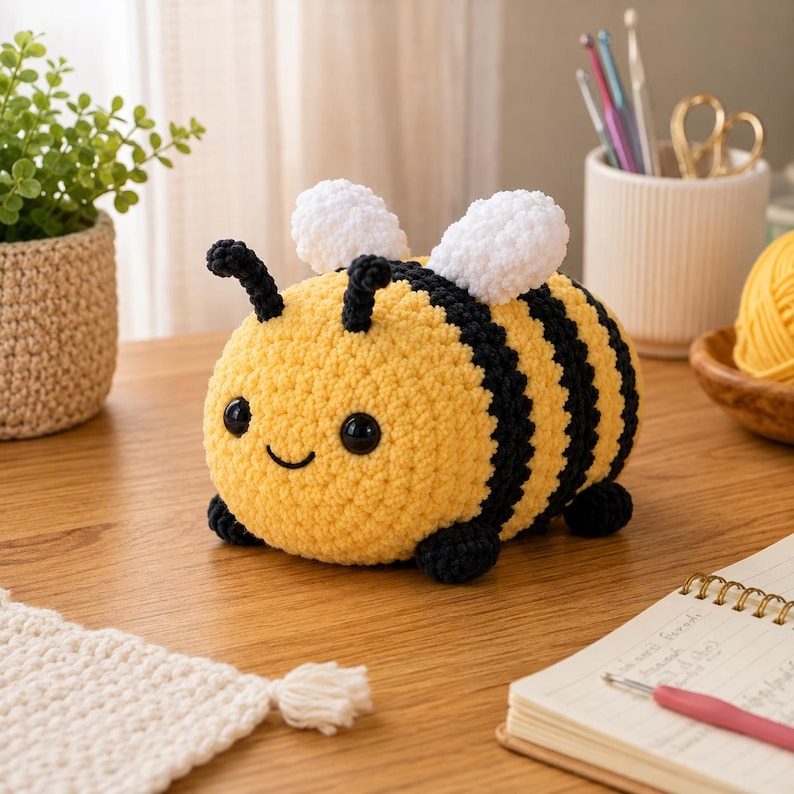
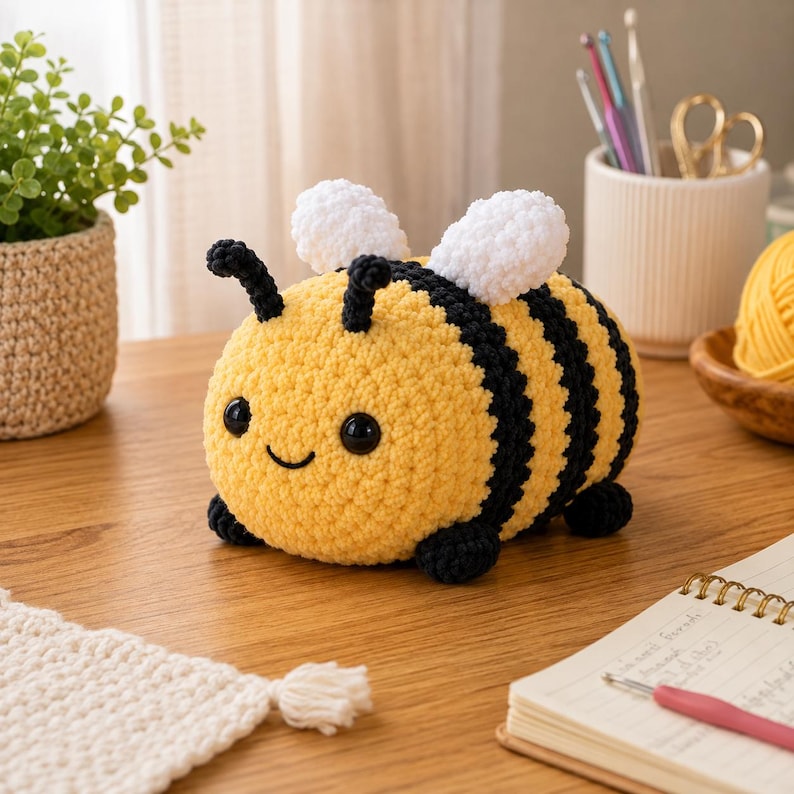
Make practice useful. Work a small square in each stitch and keep them. You will see your tension settle down square by square, and you will have a little record of how far you have come. Then choose a small pattern that only uses what you know. The patterns in our shop list their stitches clearly, and beginner friendly ones like the bee and the jellyfish stick to single crochet, increases and decreases. Finish one small thing. Hold it in your hand. That proud little feeling is what keeps you going to the next project, and the next.